Overview:
N3 AI Accounting now supports SVDP e-Invoice submission to help businesses regularize outstanding or previously unsubmitted e-Invoices under the e-Invoice Special Voluntary Disclosure Programme (SVDP).
When submitting an e-Invoice, the system provides two submission options:
Submit e-Invoice – submits the document using MyInvois e-Invoice Version 1.1.
SVDP e-Invoice – submits the document using MyInvois SVDP Version 1.3.
This allows users to select the appropriate submission method according to their e-Invoice requirement.
Note: The SVDP document versions are introduced by HASiL to support taxpayers in regularizing their e-Invoice compliance. The SVDP is effective until 31 December 2027.
Scenario:
A business may discover that an e-Invoice for a previous period was not submitted or requires regularization.
For example:
The business did not submit the June 2026 consolidated e-Invoice.
In August 2026, the user discovers the outstanding submission and needs to regularize the June transaction.
In this situation, the user can generate the applicable consolidated e-Invoice for the previous period and select SVDP e-Invoice during submission.
Solution:
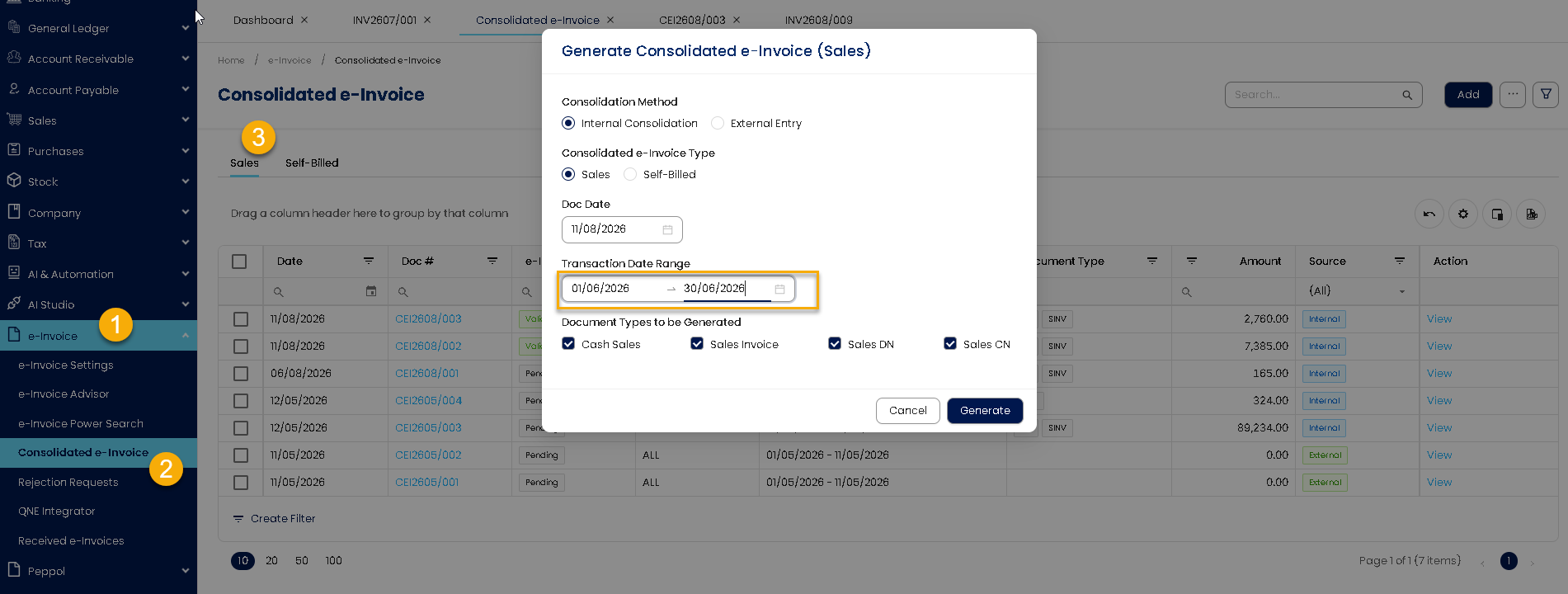
1. Navigate to e-Invoice > Consolidated e-Invoice > Sales
Update the Transaction Date Range.
For example, if the June 2026 consolidated e-Invoice was missed, generate the transaction for the applicable June 2026 period.
Click Generate
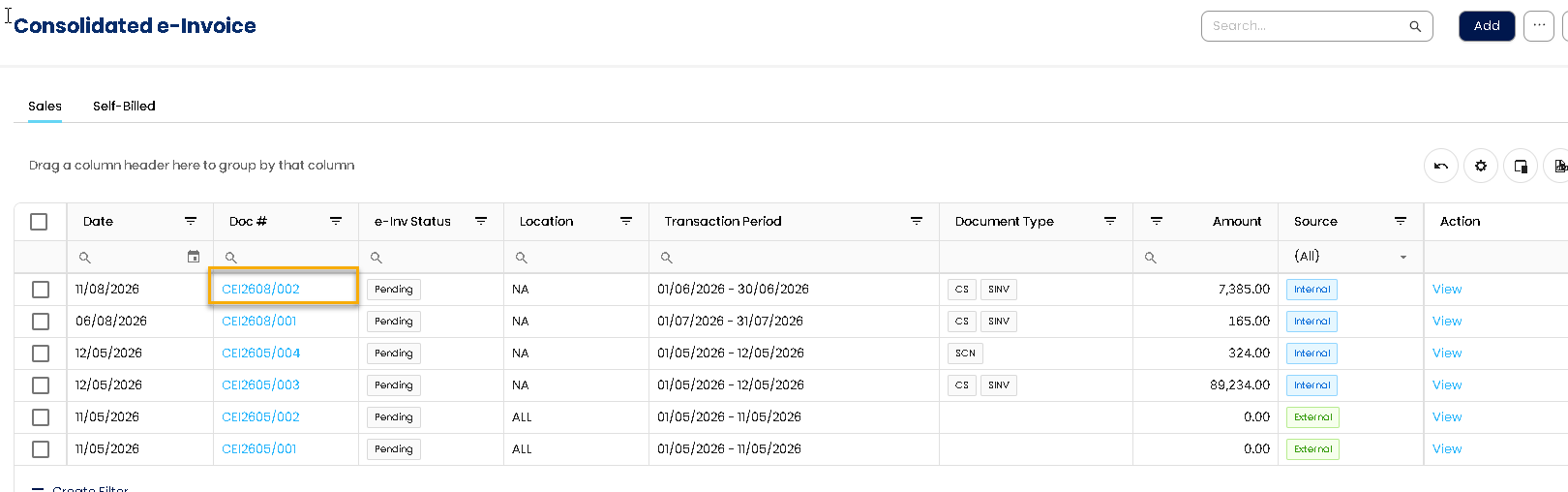
2. System generated the transaction, click on it
3. User verify the contents, if everything is correct click on “SVDP e-Invoice” button.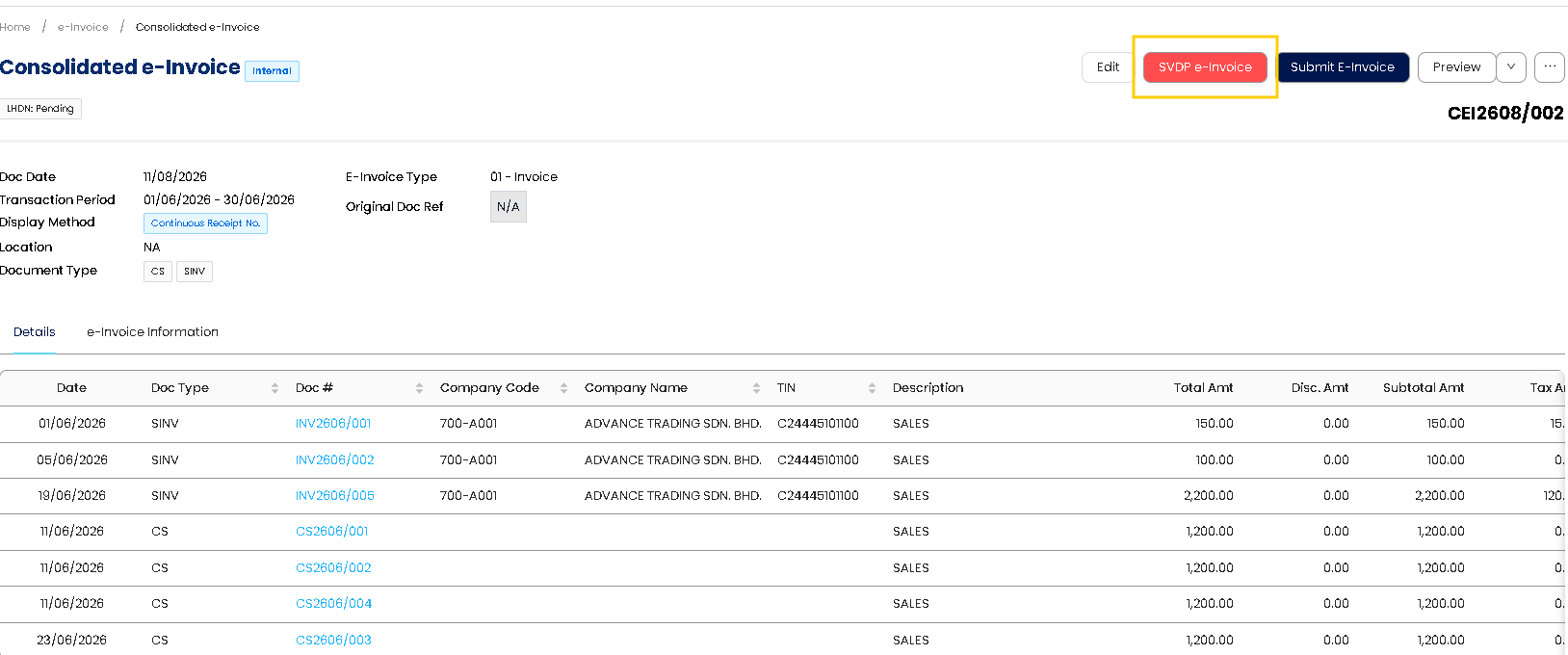
Click “SVDP e-Invoice” when system prompts for confirmation

System submits e-Invoice successfully
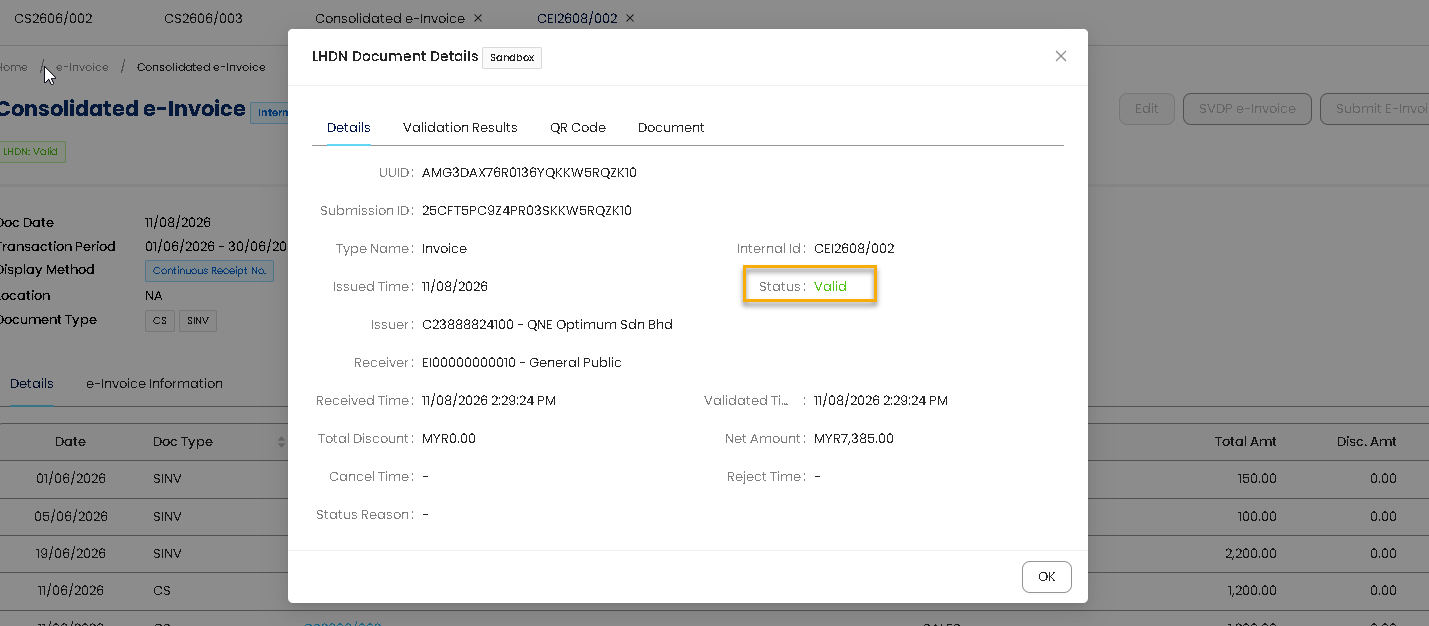
Click on QR Code > E-Invoice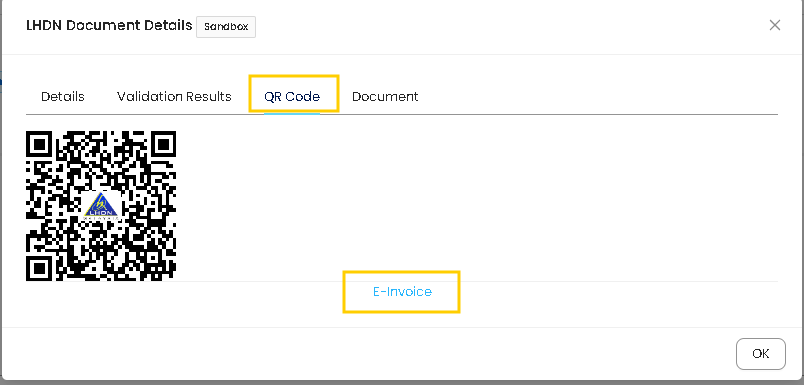
MyInvois Portal submission is v1.3
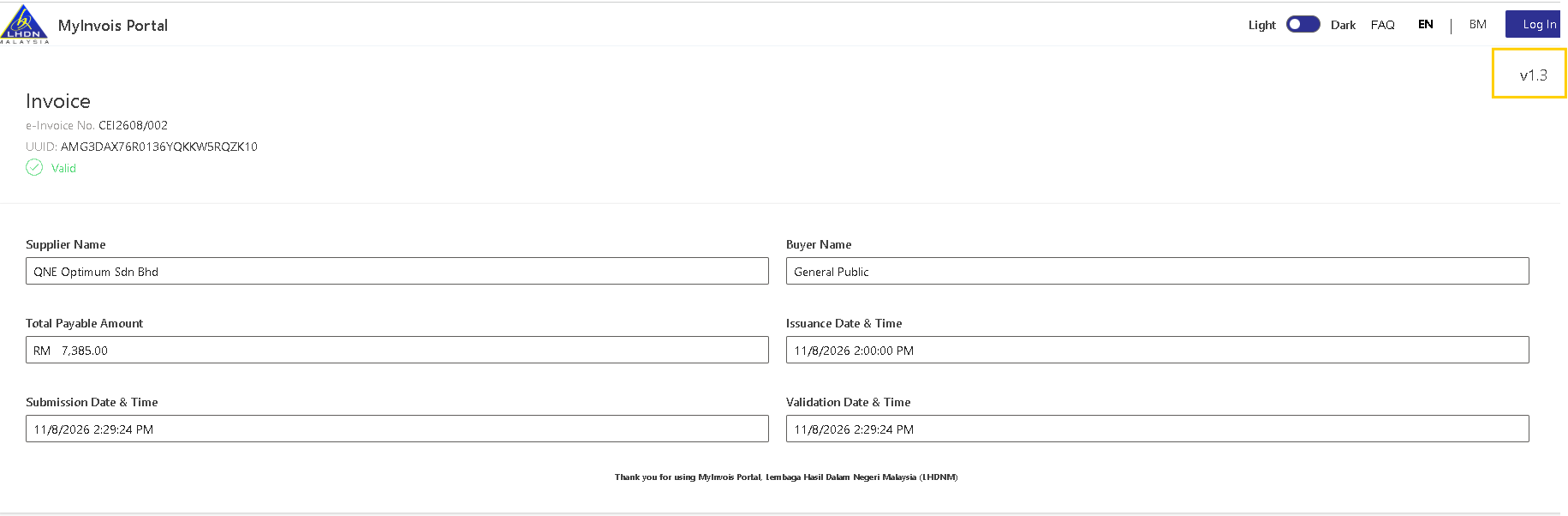
Check MyInvois Portal, system submit as version 1.3
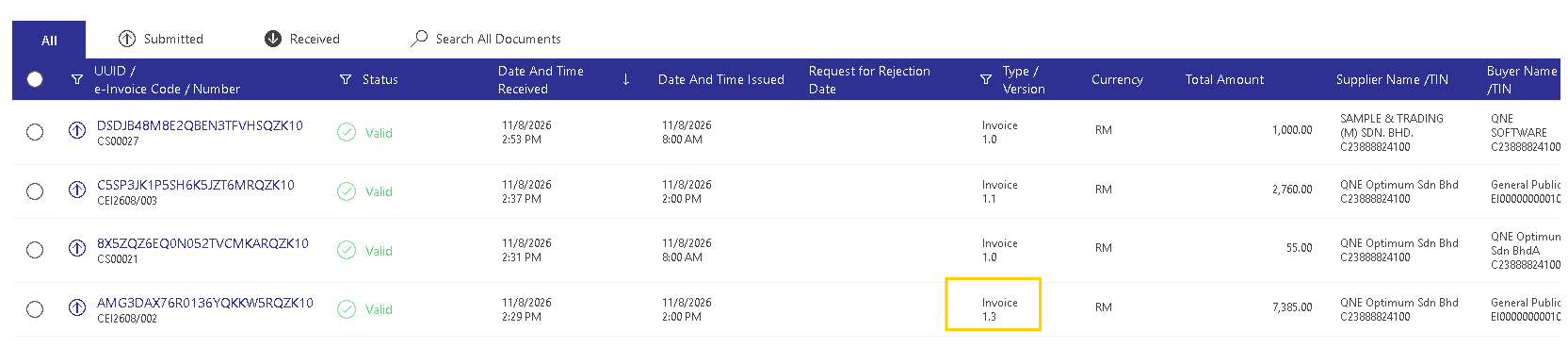
Note:
If user click on “Submit e-Invoice” button, system submit as ver 1.0 which the normal invoice
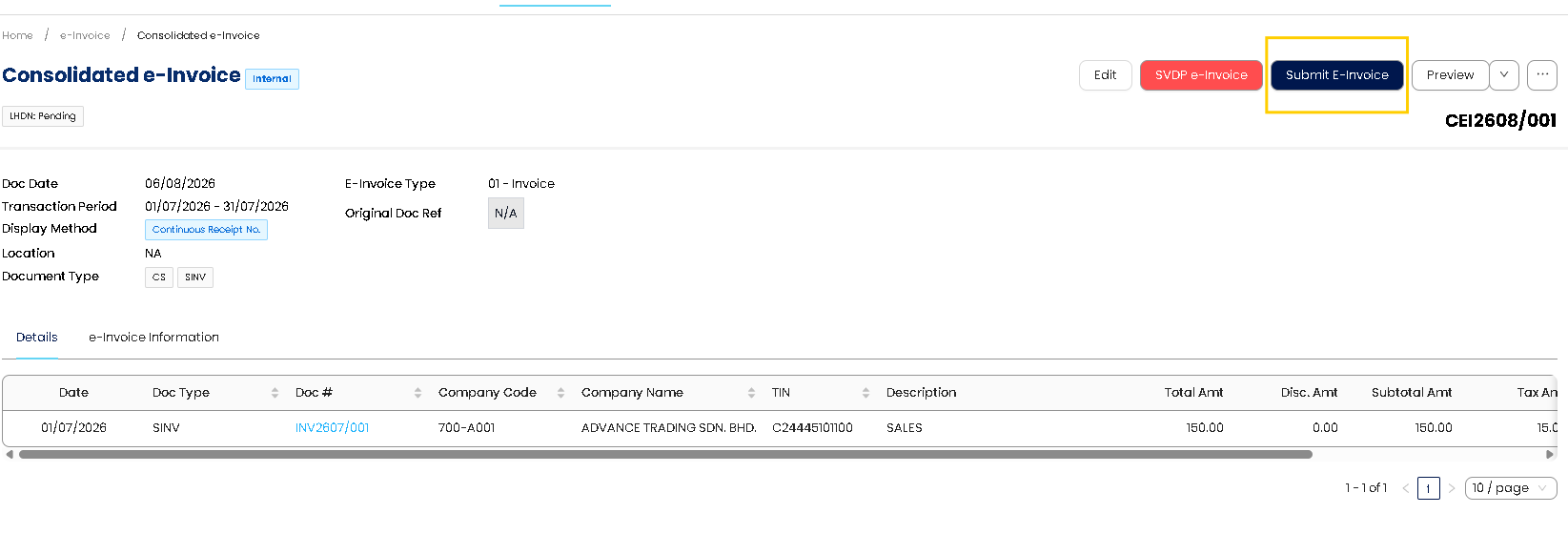
System submits as version 1.1

FAQ
1. What is SVDP e-Invoice?
SVDP e-Invoice is a submission option in N3 AIAccounting that allows users to submit e-Invoices under the e-Invoice Special Voluntary Disclosure Programme (SVDP).
2. When should I use SVDP e-Invoice?
Use SVDP e-Invoice when the e-Invoice needs to be submitted under the SVDP programme, such as when regularizing an outstanding e-Invoice from a previous period.
3. What is the difference between “Submit e-Invoice” and “SVDP e-Invoice”?
- Submit e-Invoice – for normal e-Invoice submission using MyInvois Version 1.1.
- SVDP e-Invoice – for SVDP submission using MyInvois SVDP Version 1.3.
4. Can I use SVDP e-Invoice for a previous month's consolidated e-Invoice?
Yes. If a consolidated e-Invoice from a previous period needs to be regularised under SVDP, users can select SVDP e-Invoice for the submission.
5. For example, I missed my June 2026 consolidated e-Invoice. Which option should I use?
If the June 2026 consolidated e-Invoice needs to be submitted under SVDP, select SVDP e-Invoice instead of the normal Submit e-Invoice option.
6. What MyInvois version does QNE use for normal e-Invoice submission?
N3 AI Accounting uses MyInvois e-Invoice Version 1.1 for normal e-Invoice submission.
7. What MyInvois version does QNE use for SVDP submission?
N3 AI Accounting uses MyInvois SVDP Version 1.3 when the user selects SVDP e-Invoice.
8. Do I need to select SVDP e-Invoice for every e-Invoice?
No. SVDP e-Invoice is intended for submissions under the SVDP programme. For normal e-Invoice submissions, continue using Submit e-Invoice.
9. Will QNE automatically submit the document as SVDP?
The user needs to select SVDP e-Invoice when submitting the document under SVDP. The system will then use the SVDP 1.3 document version for submission.
10. Can I use SVDP e-Invoice for normal e-Invoice submission?
It is recommended to select the submission option according to the purpose:
- Normal e-Invoice → Submit e-Invoice
- SVDP submission → SVDP e-Invoice
11. What should I check before submitting an SVDP e-Invoice?
Before submitting, users should:
- Confirm that the transaction is required to be submitted under SVDP.
- Check the invoice/consolidated invoice details.
- Ensure the relevant previous-period transactions are correct.
- Select SVDP e-Invoice instead of Submit e-Invoice.
Was this article helpful?
That’s Great!
Thank you for your feedback
Sorry! We couldn't be helpful
Thank you for your feedback
Feedback sent
We appreciate your effort and will try to fix the article
